Stress has become the defining health challenge of our time. The World Health Organisation has called it the "health epidemic of the 21st century." Chronic stress does not merely make you feel bad — it fundamentally alters your body’s chemistry, weakens your immune system, disrupts your sleep, impairs your digestion, accelerates aging, and increases your risk of cardiovascular disease, diabetes, and mental health conditions.
While managing the sources of stress is important, having effective tools to regulate your nervous system in real time is equally critical. This is where essential oils offer a uniquely powerful advantage.
Why Aromatherapy Works for Stress
The connection between scent and emotion is not metaphorical — it is anatomical. Your olfactory nerve is the only cranial nerve directly exposed to the external environment, and it connects to the limbic system without passing through the thalamic relay station that other sensory information must traverse.
This means that when you inhale an essential oil, its volatile compounds reach the amygdala (your emotional processing centre) and hippocampus (your memory centre) within milliseconds — faster than any other sensory input. This is why a particular scent can instantly transport you to a childhood memory, or why the smell of lavender can slow your heart rate before you consciously register the aroma.
This direct neural pathway makes aromatherapy uniquely effective for managing acute stress responses. While cognitive techniques like deep breathing and meditation require conscious effort and practice, aromatic intervention works at a pre-cognitive level, shifting your nervous system state automatically.
The Top Essential Oils for Stress Management
1. Lavender — The Universal Calmer
Lavender is the most studied essential oil for anxiety and stress, with over 100 clinical studies examining its effects. Research published in Frontiers in Behavioural Neuroscience demonstrated that linalool, lavender’s primary compound, produces anxiolytic effects comparable to prescription anti-anxiety medications by modulating GABA receptor activity.
A randomised controlled trial in the International Journal of Psychiatry in Clinical Practice found that an oral lavender oil preparation was as effective as lorazepam (a common benzodiazepine) for generalised anxiety disorder, without the sedation, dependency risk, or cognitive impairment.
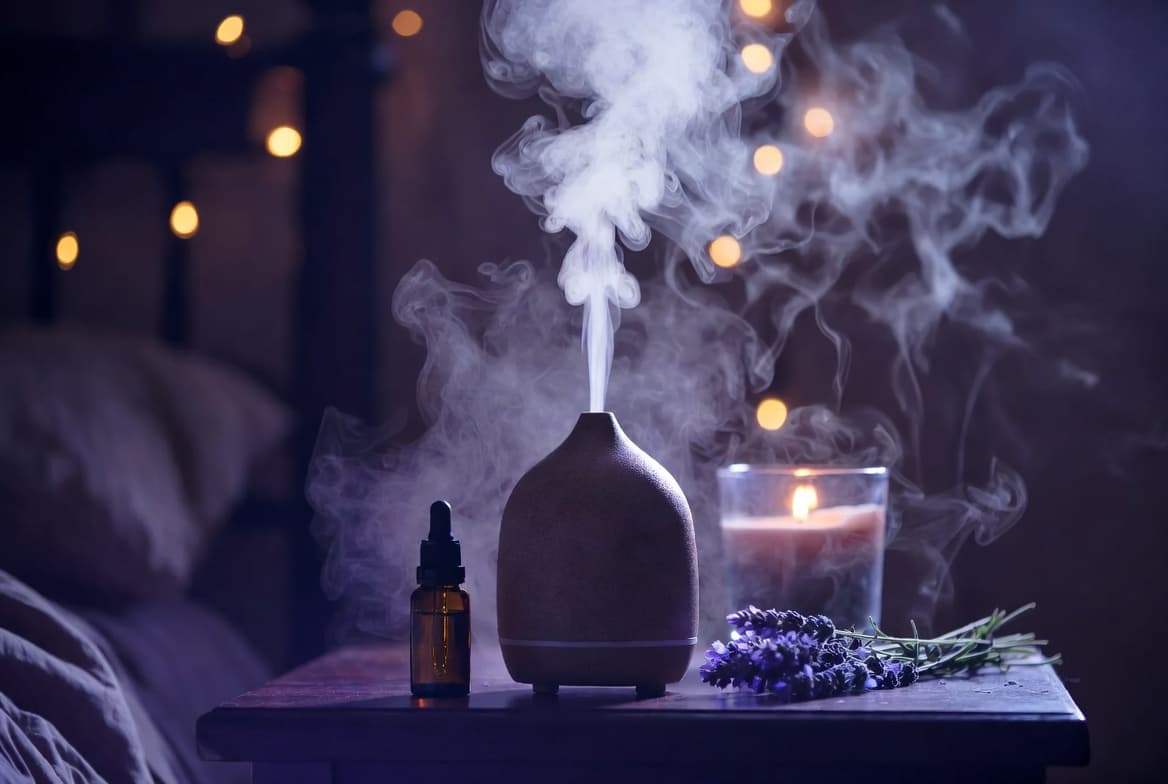
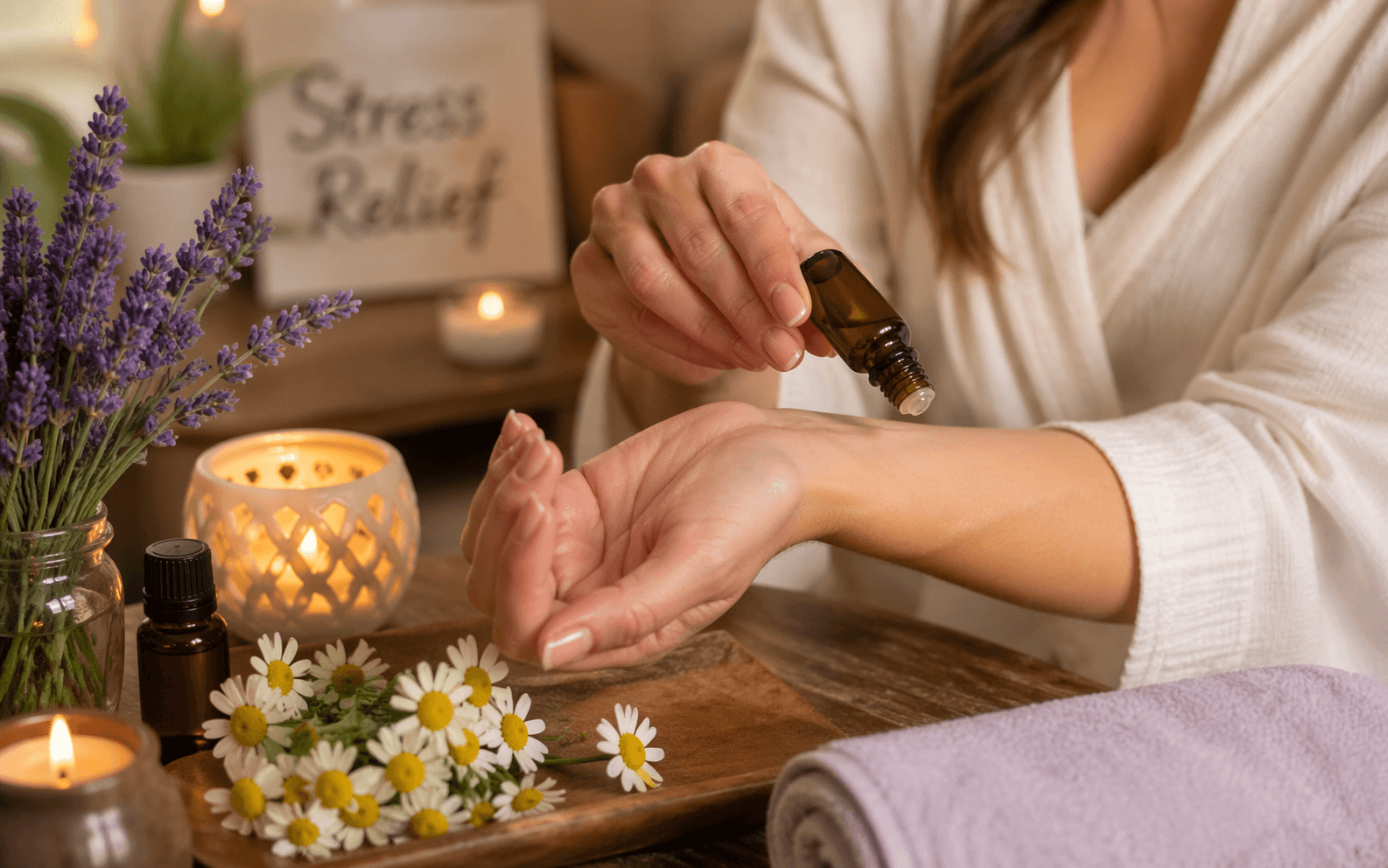
How to use: Keep a roller bottle of diluted lavender in your bag or at your desk. Apply to wrists and inhale deeply during stressful moments. Diffuse in your living space during evening hours to support the transition from daytime alertness to evening relaxation.
2. Bergamot — Stress in the Body
Bergamot addresses the physical manifestation of stress in a way few other oils can. A study in Phytotherapy Research found that just 15 minutes of bergamot inhalation reduced salivary cortisol levels by 23 percent, lowered heart rate, and shifted the autonomic nervous system from sympathetic (fight-or-flight) to parasympathetic (rest-and-digest) dominance.
This makes bergamot particularly valuable for people who carry stress in their bodies — tight shoulders, clenched jaw, shallow breathing, rapid heartbeat, and digestive upset.
How to use: Diffuse 3 to 4 drops when you arrive home from work to create a clear transition between "work mode" and "home mode." Apply 1 drop to your palms, rub together, and inhale deeply before important meetings or presentations.
3. Ylang Ylang — Emotional Release
Ylang ylang has a rich, exotic, floral scent that promotes emotional balance and releases held tension. Research in the journal Phytotherapy Research found that ylang ylang inhalation decreases blood pressure, lowers cortisol, and increases feelings of calm and contentedness.
Its unique chemistry includes linalool, geranyl acetate, and benzyl acetate, which together create a profoundly soothing effect on the central nervous system. In Indonesian and Filipino traditional medicine, ylang ylang has been used for centuries to address emotional disturbances and promote inner peace.
How to use: Add 2 to 3 drops to your evening bath. Combine with a carrier oil for a calming self-massage, focusing on the neck, shoulders, and temples. Diffuse during yoga or stretching practice.
4. Frankincense — Mental Stillness
While many calming oils work primarily on the emotional body, frankincense uniquely addresses the mental component of stress — the racing thoughts, the inability to be present, the constant mental projection into future worries or past regrets.
Incensole acetate, found exclusively in frankincense, activates ion channels in the brain associated with warmth and anxiety reduction. This is why frankincense has been central to meditation and contemplative practice across every major spiritual tradition for thousands of years.
How to use: Apply 1 drop to the centre of your forehead (the third eye point) before meditation. Diffuse during any mindfulness practice. When your mind feels overwhelmed, place a drop in your palms and take 10 slow breaths.
5. Vetiver — The Anchor
Vetiver is called "the oil of tranquility" in Ayurvedic tradition and for good reason. Its deep, earthy, complex aroma acts as an anchor for an unmoored mind. Research has shown particular promise for vetiver in supporting focus and reducing hyperactivity, suggesting it modulates the same neural pathways involved in attention and emotional regulation.
How to use: Apply 1 drop to the back of the neck or the bottoms of the feet when feeling scattered or overwhelmed. Vetiver is viscous and very potent, so a small amount goes a long way. Combine with lavender in your diffuser for a deeply grounding evening blend.
Building a Stress-Resilient Routine
Managing stress is not about eliminating it — some stress is healthy and motivating. The goal is building resilience: the ability to respond to challenges without becoming overwhelmed, and to return to baseline calm quickly after a stressful event.
Morning Anchoring (3 minutes)
Before checking your phone or starting your day, apply frankincense to your forehead and take 10 deep breaths. Set an intention for how you want to feel today.
Midday Reset (2 minutes)
At lunch or whenever you feel tension building, apply lavender to your wrists and step outside for a brief walk. Changing your physical environment interrupts the stress loop.
Evening Transition (5 minutes)
Diffuse bergamot when you arrive home. Change your clothes. This physical and aromatic transition signals to your nervous system that the demands of the day are complete.
Pre-Sleep Wind-Down (10 minutes)
Add ylang ylang to your bath or diffuse vetiver and lavender. Journal briefly about three things you are grateful for. This practice rewires your brain’s default stress response over time.
When Essential Oils Are Not Enough
Essential oils are powerful wellness tools, but they are part of a broader approach to stress management. If you experience persistent anxiety, panic attacks, or depression, please consult with a qualified healthcare professional. Aromatherapy works best as a complement to other approaches including exercise, nutrition, sleep hygiene, social connection, and professional support when needed.
Your nervous system was not designed for the pace of modern life. Give it the ancient, natural support it craves.