The chakra system is a 5,000-year-old framework for understanding human energy that originated in the Vedic traditions of India. Far from being mystical abstraction, the chakra model maps remarkably well onto modern understanding of the nervous system, endocrine glands, and the mind-body connection.
Whether you approach chakras from a spiritual perspective or simply as a useful framework for understanding your physical and emotional wellbeing, this guide will give you a thorough understanding of how the system works and how essential oils can support balance.
What Are Chakras?
The word "chakra" comes from Sanskrit, meaning "wheel" or "disc." Each chakra is described as a spinning vortex of energy located along the central channel of the body, from the base of the spine to the crown of the head. There are seven primary chakras, and each one corresponds to specific nerve bundles, major organs, and aspects of your psychological and spiritual wellbeing.
Think of chakras as energy processing centres. Just as your digestive system processes food and your lungs process air, your chakras process life experience — physical sensations, emotions, thoughts, and spiritual awareness.
When a chakra is balanced and open, energy flows freely, and you experience health, vitality, and emotional equilibrium in the areas that chakra governs. When blocked or overactive, physical symptoms, emotional disturbances, and behavioural patterns can emerge.
The Seven Chakras in Detail
1. Root Chakra (Muladhara) — Foundation and Safety
Location: Base of the spine, pelvic floor
Colour: Red
Element: Earth
Governs: Physical survival, safety, stability, grounding, connection to the body
When your root chakra is balanced, you feel secure, stable, and grounded in your body and your life. You trust that your basic needs will be met. You feel a deep sense of belonging on this earth.
When imbalanced, you may experience anxiety about money or security, chronic fatigue, lower back pain, immune disorders, or a persistent feeling of being "unrooted" or disconnected from your body.
Essential Oils: Vetiver, cedarwood, patchouli, sandalwood, and myrrh. These heavy, earthy base notes resonate with the grounding energy of the root chakra.
2. Sacral Chakra (Svadhisthana) — Creativity and Pleasure
Location: Two inches below the navel
Colour: Orange
Element: Water
Governs: Emotions, creativity, sexuality, pleasure, relationships, flow
A balanced sacral chakra allows you to feel your emotions fully without being overwhelmed by them. You experience pleasure without guilt, creativity flows naturally, and you maintain healthy boundaries in relationships.
When blocked, you may struggle with emotional numbness, creative blocks, low libido, guilt around pleasure, or difficulty adapting to change. Physical symptoms can include lower abdominal discomfort, menstrual irregularities, and urinary issues.
Essential Oils: Wild orange, ylang ylang, sandalwood, jasmine, and clary sage. These sensual, warm oils help release emotional stagnation and restore creative flow.
3. Solar Plexus Chakra (Manipura) — Personal Power
Location: Upper abdomen, stomach area
Colour: Yellow
Element: Fire
Governs: Self-confidence, willpower, self-discipline, personal identity, digestion
When Manipura is balanced, you feel confident in your decisions, clear about your personal boundaries, and motivated to pursue your goals. You have a healthy relationship with power — neither dominating others nor allowing yourself to be dominated.
Imbalance shows up as low self-esteem, indecisiveness, perfectionism, control issues, or excessive need for external validation. Physically, it manifests as digestive problems, stomach ulcers, and chronic fatigue.
Essential Oils: Lemon, ginger, peppermint, black pepper, and cinnamon. These warming, stimulating oils ignite the fire of personal power and support healthy digestion.
4. Heart Chakra (Anahata) — Love and Connection
Location: Centre of the chest
Colour: Green
Element: Air
Governs: Love, compassion, forgiveness, empathy, connection, immune health
The heart chakra is the bridge between the lower (physical) and upper (spiritual) chakras. When balanced, you give and receive love freely, practice genuine forgiveness, feel empathy without losing yourself, and maintain meaningful connections.
A blocked heart chakra creates emotional walls, fear of intimacy, codependency, jealousy, or an inability to forgive. Physical manifestations include heart conditions, respiratory issues, upper back pain, and poor circulation.
Essential Oils: Rose, geranium, eucalyptus, bergamot, and melissa. Rose in particular is considered the highest-frequency essential oil and has a profound effect on opening the heart.
5. Throat Chakra (Vishuddha) — Authentic Expression
Location: Throat and neck
Colour: Blue
Element: Ether (Space)
Governs: Communication, self-expression, truth, creativity through words, listening
When balanced, you speak your truth clearly and kindly. You express your needs without aggression. You listen deeply and communicate authentically, neither suppressing your voice nor dominating conversations.
Imbalance appears as fear of speaking up, talking too much without saying anything meaningful, throat problems, thyroid issues, neck and shoulder tension, and a persistent feeling of having something "stuck" in your throat.
Essential Oils: Chamomile, peppermint, eucalyptus, spearmint, and cypress. These cooling, clarifying oils support clear communication and release tension in the throat area.
6. Third Eye Chakra (Ajna) — Intuition and Insight
Location: Centre of the forehead, between the eyebrows
Colour: Indigo
Element: Light
Governs: Intuition, imagination, wisdom, perception, inner knowing, clarity
A balanced third eye allows you to see beyond surface appearances, trust your intuition, think clearly and creatively, and access deeper wisdom. You make decisions that align with your authentic self rather than external pressure.
When blocked, you may experience confusion, poor concentration, lack of imagination, headaches, eye strain, insomnia, and difficulty distinguishing between intuition and fear.
Essential Oils: Frankincense, clary sage, juniper berry, rosemary, and helichrysum. Frankincense has been used for millennia in meditation practices across every major tradition precisely because of its ability to quiet mental noise and sharpen inner perception.
7. Crown Chakra (Sahasrara) — Spiritual Connection
Location: Top of the head
Colour: Violet or white
Element: Cosmic consciousness
Governs: Spiritual connection, universal awareness, enlightenment, purpose, transcendence
The crown chakra represents your connection to something greater than your individual self — whether you call it the universe, divine consciousness, nature, or simply the interconnectedness of all life. When balanced, you experience a sense of peace, purpose, and belonging in the larger fabric of existence.
Imbalance can manifest as spiritual disconnection, cynicism, closed-mindedness, depression, chronic exhaustion, or conversely, spiritual bypass (using spirituality to avoid dealing with real-world problems).
Essential Oils: Frankincense, lavender, myrrh, neroli, and spikenard. These sacred oils have been used in spiritual practice across cultures for thousands of years.
A Daily Chakra Balancing Ritual
You do not need an hour of meditation to work with your chakras. A simple 5 to 7 minute morning practice can create profound shifts over time:
- 1Sit comfortably with your spine straight
- 2Apply the corresponding essential oil (diluted) to each chakra point, starting from the root and moving upward
- 3At each point, take three deep breaths and set a simple intention
- 4Visualise the colour of each chakra glowing brightly as you breathe
- 5End with three breaths at the crown, feeling connection to the wholeness of life
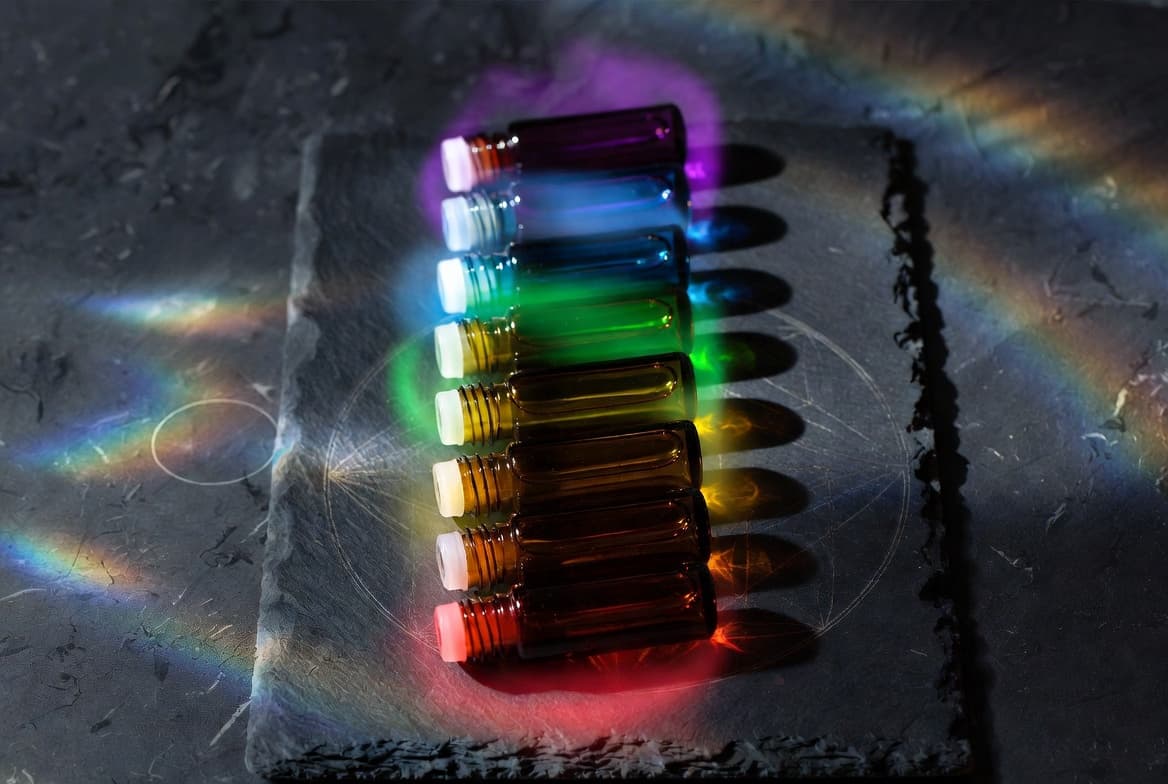
Our 7 Chakras Roll-On Kit is specifically designed for this daily practice. Each roll-on is pre-diluted with the optimal blend for its corresponding chakra, making the ritual effortless and accessible.
Consistency matters more than duration. Five minutes every day creates deeper change than an hour once a month.