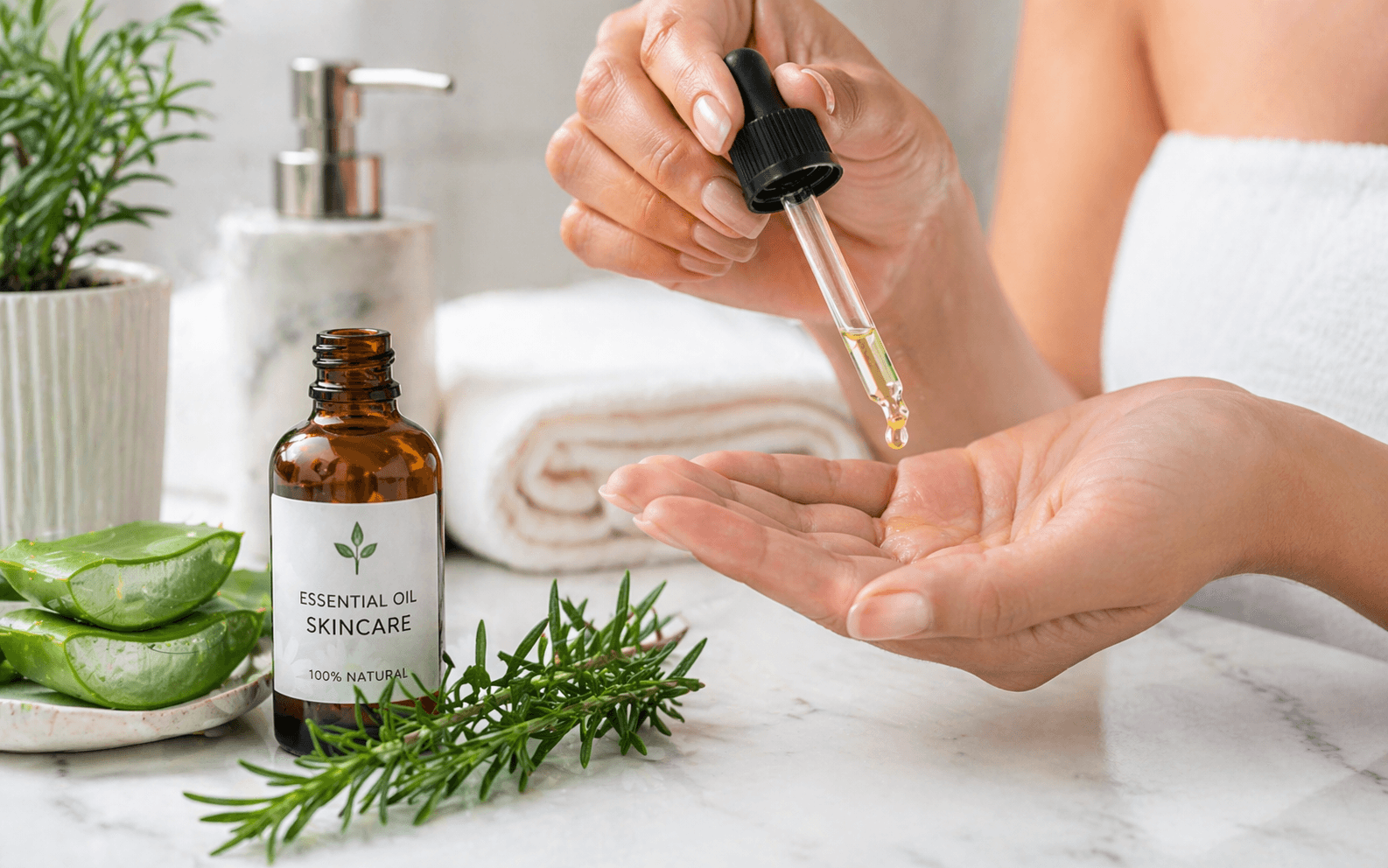
Your skin is your largest organ, and it is remarkably responsive to the botanical compounds found in essential oils. Unlike synthetic skincare ingredients that often address symptoms while ignoring root causes, essential oils work with your skin’s own biology — supporting cellular renewal, balancing oil production, calming inflammation, and protecting against environmental damage.
The key to using essential oils safely and effectively on your skin is understanding dilution, choosing the right oils for your skin type, and building consistent routines. This guide covers everything you need to know.
How Essential Oils Benefit the Skin
Essential oils interact with your skin at multiple levels:
Cellular level: Certain compounds, like the boswellic acids in frankincense, support healthy cell turnover — the process by which old, damaged skin cells are replaced with new, healthy ones. This is the foundation of youthful, radiant skin.
Barrier level: Your skin’s moisture barrier is a delicate structure of lipids and ceramides that prevents water loss and protects against environmental aggressors. Oils like lavender and chamomile help maintain and repair this barrier.
Microbial level: Your skin hosts a diverse microbiome of beneficial bacteria. Unlike harsh chemical antiseptics that destroy everything indiscriminately, essential oils like tea tree and manuka selectively target harmful organisms while supporting the beneficial ones.
Inflammatory level: Chronic low-grade inflammation is the root cause of many skin concerns, from acne and rosacea to premature aging. Anti-inflammatory oils like chamomile, helichrysum, and frankincense address this underlying driver rather than just masking symptoms.
The Best Essential Oils for Each Skin Concern
For Anti-Aging and Fine Lines
Frankincense is the gold standard. Its boswellic acids promote cellular renewal and support collagen production. Regular use visibly reduces fine lines, improves skin elasticity, and evens skin tone. Add 1 drop to your night cream for cumulative anti-aging benefits.
Geranium helps balance hormones that affect skin aging and supports the production of new skin cells. Its astringent properties help tighten and tone the skin without over-drying.
Rose is the highest-frequency essential oil and is rich in citronellol and geraniol, compounds that hydrate deeply and support the skin’s natural moisture retention. Rose oil is particularly effective for mature, dry, or sensitive skin.
For Acne and Blemishes
Tea tree is the most extensively studied essential oil for acne. A landmark study published in the Medical Journal of Australia found that 5 percent tea tree oil was as effective as 5 percent benzoyl peroxide for reducing acne lesions, but with significantly fewer side effects including less dryness, peeling, and irritation.
Lavender soothes inflamed breakouts, reduces redness, and supports healing without scarring. Its gentle nature makes it suitable even for sensitive acne-prone skin.
Rosemary contains carnosic acid, which helps regulate sebum production — particularly useful for oily skin that is prone to clogged pores and breakouts.
For Hyperpigmentation and Uneven Tone
Lemon (used only at night due to photosensitivity) contains limonene and citric acid, which gently brighten the complexion and reduce the appearance of dark spots over time.
Ylang ylang helps regulate melanin production and supports overall skin radiance. Its balancing effect on sebum production also helps maintain a healthy glow without excess oiliness.
Carrot seed is rich in beta-carotene and vitamin A, which support cell renewal and help fade post-inflammatory hyperpigmentation left by acne or sun damage.
For Dry or Sensitive Skin
Chamomile (both Roman and German varieties) is one of the most soothing essential oils available. Its azulene content gives it powerful anti-inflammatory properties that calm reactive, sensitive skin. German chamomile is particularly effective for eczema-prone skin.
Sandalwood is deeply hydrating and helps the skin retain moisture. Its alpha-santalol content has been shown to reduce transepidermal water loss, making it ideal for chronically dry skin.
Neroli (orange blossom) supports skin cell regeneration, improves skin elasticity, and is gentle enough for the most sensitive skin types. It is also one of the most effective oils for reducing the appearance of stretch marks and scars.
Safe Dilution Guidelines
Essential oils are powerful and concentrated. Proper dilution is non-negotiable for skincare:
- Face (normal skin): 1 to 2 percent dilution = 3 to 6 drops per tablespoon of carrier oil
- Face (sensitive skin): 0.5 to 1 percent = 1 to 3 drops per tablespoon
- Body: 2 to 3 percent = 6 to 9 drops per tablespoon
- Spot treatment: Up to 5 percent = 15 drops per tablespoon (small areas only)
Best Carrier Oils for Skincare
- Jojoba — closest to your skin’s natural sebum, non-comedogenic, suitable for all skin types
- Rosehip seed — rich in vitamin A and essential fatty acids, excellent for anti-aging and scarring
- Argan — deeply nourishing, high in vitamin E, ideal for dry or mature skin
- Grapeseed — lightweight, antioxidant-rich, great for oily or combination skin
- Sweet almond — gentle, hypoallergenic, perfect for sensitive skin and daily body use
A Simple Daily Skincare Routine
Morning
- 1Cleanse with a gentle, pH-balanced cleanser
- 2Apply toner or hydrosol (rose water or lavender hydrosol)
- 3Serum: 3 drops rosehip seed oil + 1 drop frankincense, press into skin
- 4Moisturise with your regular cream
- 5Apply SPF (essential oils do not provide sun protection)
Evening
- 1Double cleanse (oil cleanser followed by water-based cleanser)
- 2Apply toner or hydrosol
- 3Treatment: 1 tablespoon jojoba oil + 1 drop lavender + 1 drop frankincense + 1 drop geranium
- 4Apply to face and neck with gentle upward massage for 2 minutes
- 5Eye area: 1 drop rosehip seed oil alone (no essential oils near eyes)
Weekly Treatment
Once a week, give your skin an intensive treatment:
- Mix 1 tablespoon raw honey with 1 drop lavender and 1 drop frankincense
- Apply as a face mask for 15 to 20 minutes
- Rinse with warm water and follow with your evening routine
Important Safety Notes
- Always patch test new oils on your inner forearm before facial use
- Citrus oils (lemon, bergamot, grapefruit) are photosensitive — apply only at night
- Never apply undiluted essential oils directly to facial skin
- Avoid essential oils around the eye area
- If you are pregnant or nursing, consult your healthcare provider before topical use
- If you experience any irritation, discontinue use and wash the area immediately
Your skin reflects your overall health, your hydration, your stress levels, and the quality of what you put on it. Essential oils offer some of the most potent, time-tested, and scientifically validated botanical compounds available for skin health. Treat your skin with the same reverence you would any vital organ — it deserves nothing less.