The average household contains 62 toxic chemicals in its cleaning products, according to research from the Environmental Working Group. From endocrine disruptors in surface sprays to respiratory irritants in air fresheners, conventional cleaning products expose your family to a cocktail of synthetic chemicals every single day.
Essential oils offer a powerful, effective, and genuinely pleasant alternative. Their natural antimicrobial, antiviral, and antifungal properties make them not just safer than chemical cleaners — in many cases, they are equally or more effective.
Why Essential Oils Work for Cleaning
Essential oils are not just pleasant scents — they contain potent bioactive compounds with genuine cleaning power:
Terpenes (found in lemon, orange, and pine oils) are natural solvents that cut through grease and grime. D-limonene, the primary compound in citrus oils, is so effective as a degreaser that it is used industrially to clean machine parts and remove adhesive residue.
Phenols (found in tea tree, oregano, and thyme oils) have broad-spectrum antimicrobial activity. Research published in the Journal of Applied Microbiology demonstrated that tea tree oil is effective against common household bacteria including E. coli, Salmonella, and Staphylococcus aureus at concentrations achievable in DIY cleaning solutions.
Aldehydes (found in cinnamon and lemongrass oils) have powerful antifungal properties, making them ideal for tackling mould, mildew, and yeast in bathrooms and kitchens.
1,8-Cineole (found in eucalyptus and rosemary) has been shown to reduce airborne bacteria and purify indoor air, addressing a dimension of home cleanliness that conventional products ignore entirely.
Essential Cleaning Recipes
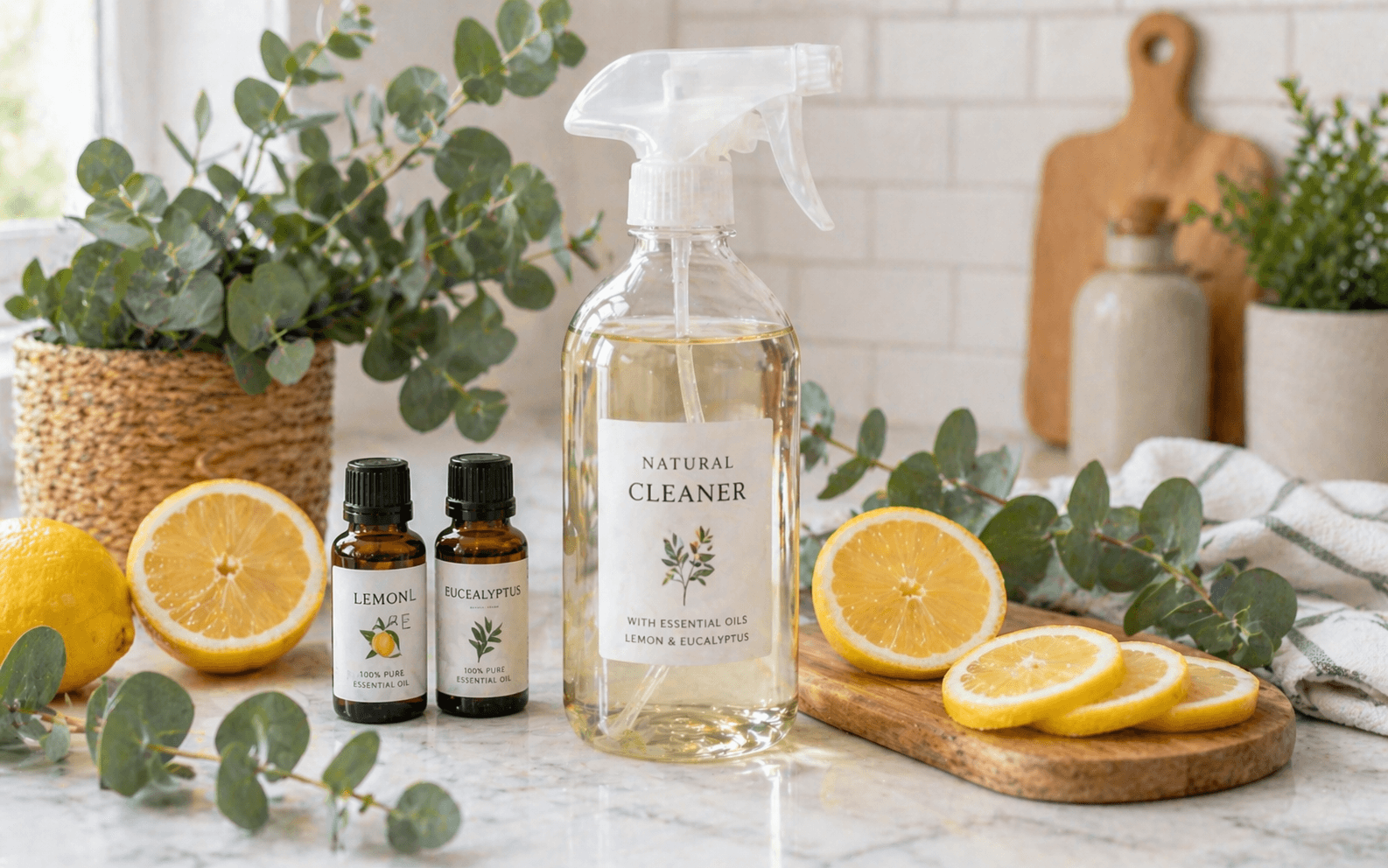
All-Purpose Surface Cleaner
This versatile spray works on kitchen counters, tables, appliances, and most hard surfaces.
Ingredients:
- 500 ml spray bottle
- 250 ml distilled white vinegar
- 250 ml water
- 15 drops tea tree oil
- 10 drops lemon oil
- 5 drops eucalyptus oil
Method: Combine all ingredients in the spray bottle and shake well before each use. Spray onto surfaces and wipe with a clean cloth. The vinegar provides acidity that kills bacteria and dissolves mineral deposits, while the essential oils add antimicrobial power and a clean, fresh scent.
Note: Do not use vinegar-based cleaners on natural stone surfaces (marble, granite) as the acidity can damage the sealant.
Bathroom Disinfectant Spray
Bathrooms require extra antimicrobial power due to constant moisture exposure.
Ingredients:
- 500 ml spray bottle
- 200 ml water
- 200 ml rubbing alcohol (70 percent isopropyl)
- 100 ml distilled white vinegar
- 20 drops tea tree oil
- 10 drops eucalyptus oil
- 5 drops peppermint oil
Method: Combine all ingredients and shake well. Spray generously on bathroom surfaces including tiles, grout, taps, toilet seats, and shower screens. Allow to sit for 5 minutes before wiping. The tea tree and eucalyptus combination is particularly effective against mould and mildew.
Floor Wash
For tile, vinyl, laminate, and sealed wood floors.
Ingredients:
- 4 litres warm water in a bucket
- 60 ml distilled white vinegar
- 10 drops lemon oil
- 5 drops lavender oil
- 5 drops tea tree oil
Method: Add all ingredients to the bucket and mix. Mop as usual. The lemon cuts through grease, the tea tree disinfects, and the lavender leaves your home smelling beautifully clean without synthetic fragrance.
Glass and Mirror Cleaner
Streak-free, crystal clear results without ammonia.
Ingredients:
- 500 ml spray bottle
- 250 ml distilled water
- 250 ml white vinegar
- 5 drops lemon oil
Method: Combine in spray bottle. Spray onto glass surfaces and wipe with a lint-free cloth or newspaper. The lemon oil cuts through any film or residue while leaving windows sparkling clean.
Natural Air Freshener
Replace plug-in air fresheners and aerosol sprays, which are among the most chemically concerning products in most homes.
Ingredients:
- 250 ml spray bottle
- 200 ml water
- 30 ml witch hazel or vodka (helps oil disperse in water)
- 15 to 20 drops of your chosen essential oil blend
Blend suggestions:
- Fresh and clean: 8 drops lemon + 6 drops eucalyptus + 4 drops peppermint
- Warm and cozy: 8 drops wild orange + 6 drops cinnamon + 4 drops clove
- Calm and serene: 10 drops lavender + 5 drops chamomile + 3 drops vanilla extract
- Forest walk: 8 drops cedarwood + 6 drops pine + 4 drops rosemary
Method: Combine ingredients, shake well before each use, and mist into the air. Unlike synthetic air fresheners that mask odours with chemicals, essential oils actually purify the air while providing natural fragrance.
Kitchen Degreaser
For stovetops, range hoods, and stubborn kitchen grease.
Ingredients:
- 500 ml spray bottle
- 250 ml water
- 125 ml white vinegar
- 60 ml liquid castile soap
- 20 drops wild orange oil
- 10 drops lemon oil
Method: Combine all ingredients gently (castile soap foams easily). Spray onto greasy surfaces, let sit for 2 to 3 minutes, then wipe with a damp cloth. The d-limonene in citrus oils is a natural solvent that dissolves grease on contact.
Room-by-Room Diffuser Guide
Beyond cleaning surfaces, diffusing essential oils throughout your home purifies the air, reduces airborne pathogens, and creates distinct atmospheres in different spaces.
Kitchen: Lemon + peppermint + rosemary — neutralises cooking odours, stimulates appetite, creates an energising cooking environment.
Living room: Wild orange + cedarwood + vanilla — warm, welcoming, and universally pleasant. Perfect for entertaining.
Bedroom: Lavender + chamomile + vetiver — promotes restful sleep and creates a sanctuary-like atmosphere.
Bathroom: Eucalyptus + tea tree + peppermint — purifying, spa-like, and naturally antimicrobial.
Home office: Rosemary + peppermint + lemon — enhances focus, memory, and productivity. Research from Northumbria University found rosemary aroma improved cognitive performance by 15 percent.
Making the Transition
Switching from conventional to natural cleaning does not have to happen overnight. Start with one or two recipes and expand as you become comfortable. You will quickly notice that your home smells better, you feel better while cleaning, and the results are genuinely impressive.
Most importantly, you eliminate the daily chemical exposure that your family has been enduring from commercial cleaning products — and you replace it with the therapeutic benefits of pure plant extracts. Your home becomes not just clean, but genuinely healthful.